Discover more about this year’s workshops and speakers by clicking on the images.
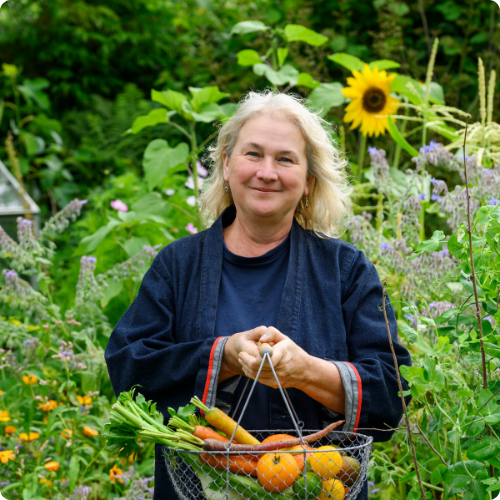
The Productive Garden | Stephanie Hafferty
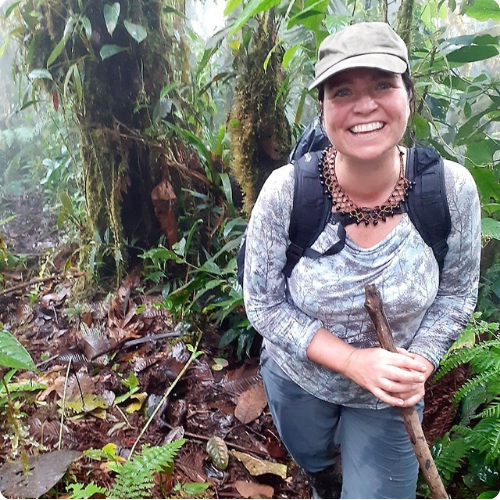
Rewilding at all Scales | Nicola Peel

Everyone makes a difference with Permaculture | Andy Goldring
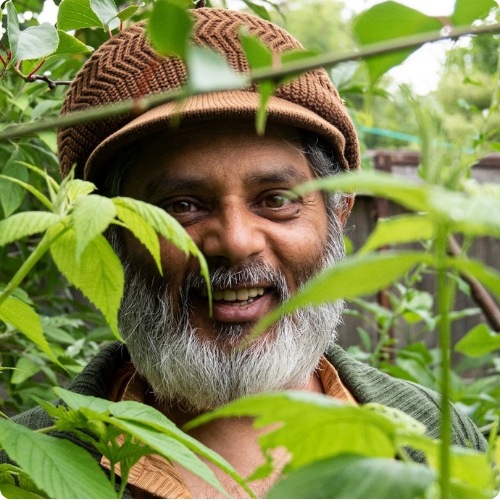
An Introduction to Sociocracy | Rakesh Rootsman Rak
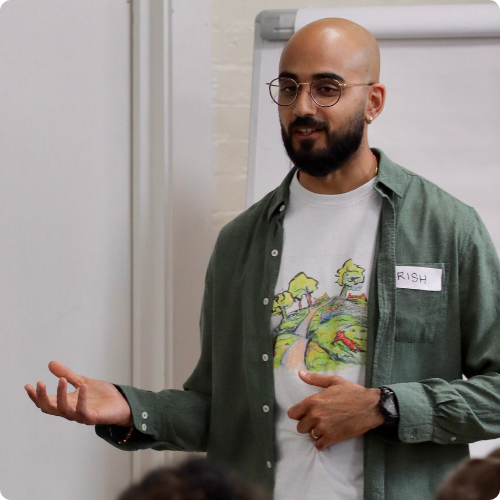
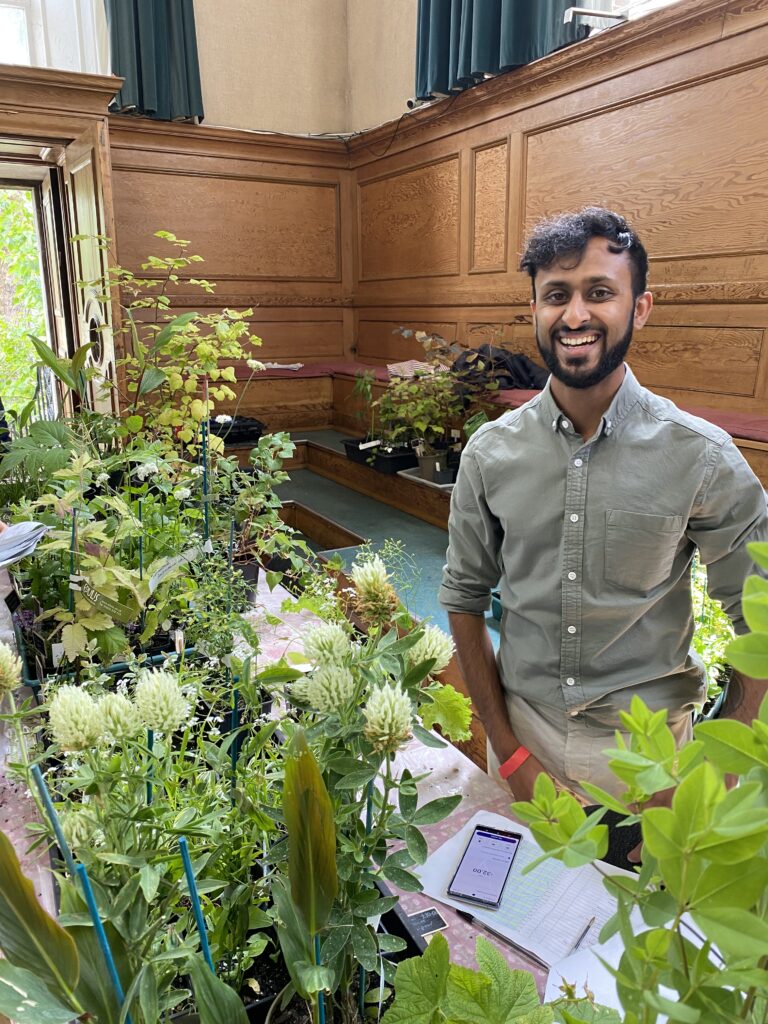
Introduction to Permaculture: The Garden & Beyond | Rishil Parekh
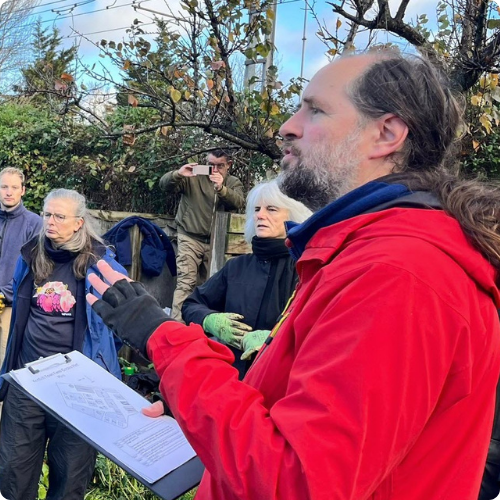
Introduction to Permaculture | Matt Phillpott
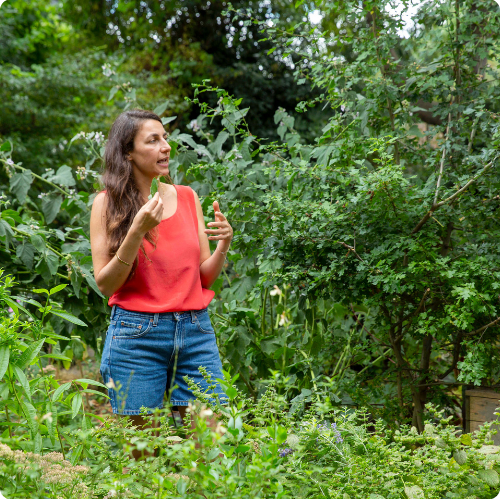
Introduction to Permaculture | Nat Mady
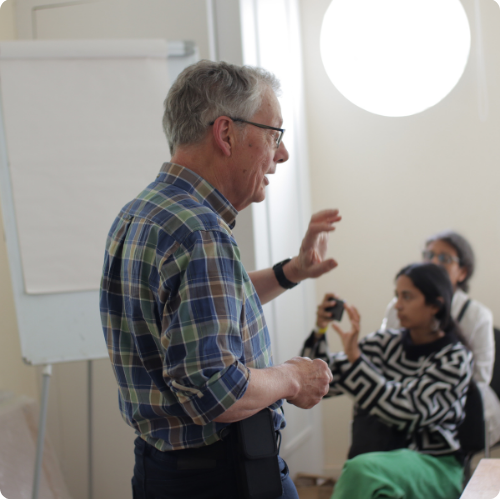
The Science of Garden Biodiversity | Julian Doberski
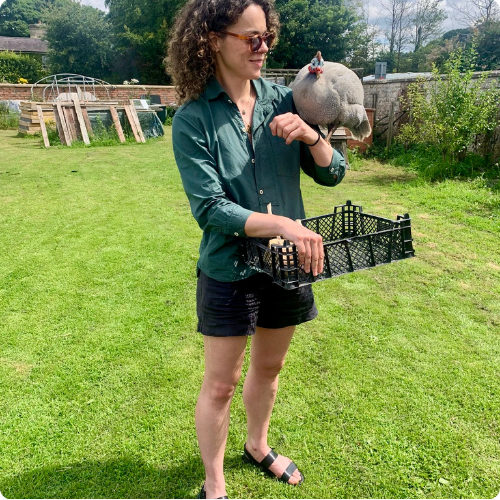
Going under the microscope with the Soil food web | Rebecca Goodall
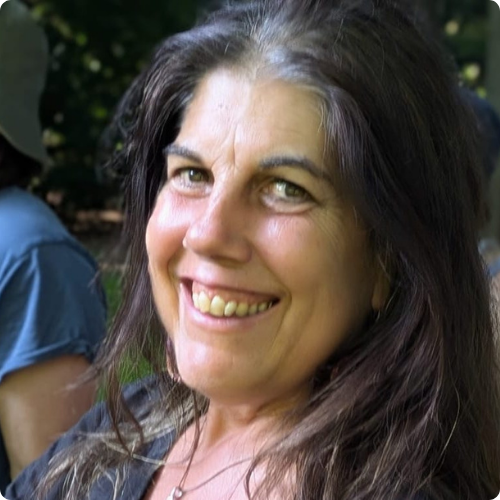
The SuperSalads Show | Jo Barker
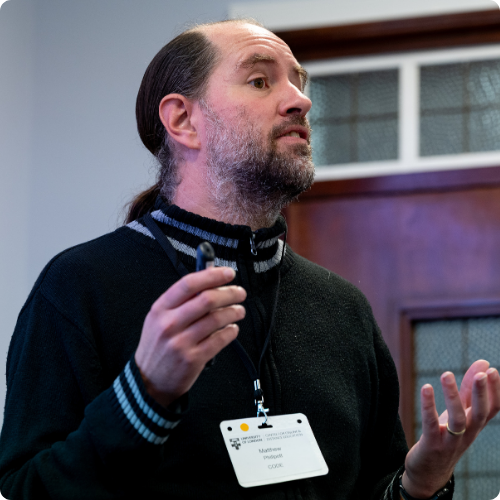
The wellbeing benefits of keeping chickens or quails | Matt Phillpott
Sewage down the pan: what happens next? | Julian Doberski
Permablitz London | Susannah Hall
Reusing Greywater | Hugh Livingstone

Composting: going beyond composting our food waste | Susannah Hall
Rain Gardens | Jon Bromwich
Processing natural fibres: nettle, hemp, flax | Allan Brown
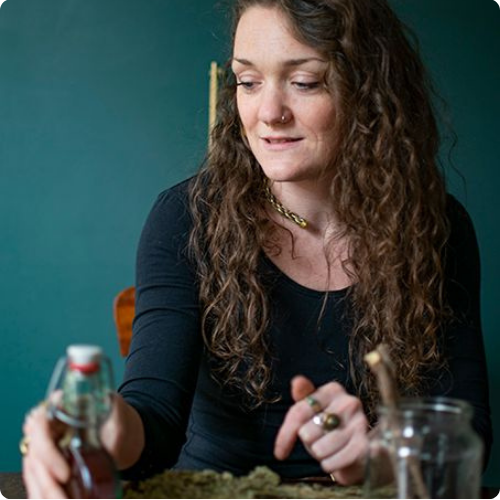
Simple Herbal Remedies | Roisin Reilly
The Productive Garden
Stephanie Hafferty
How to grow your own food year round, whatever size your space, using wildlife friendly, sustainable gardening methods. The talk will also look at what to sow and plant in August and September for cropping throughout autumn and winter, next spring and beyond.
Profile
Stephanie Hafferty is a leading voice in sustainable edible gardening. She’s a homesteader, garden designer, consultant, speaker and award winning garden and food writer.
Stephanie has been growing her own food for over 30 years, She specialises in growing food year round, affordably on a shoe string budget, using eco-friendly no dig methods, and creating recipes for nutritious meals, as well as home and body care products.
With decades of practical gardening and homesteading experience, she has created and worked in organic kitchen gardens on private estates for celebrity clients, community gardens, market gardens and for restaurants, as well as for her family in her home garden.
In 2021 Stephanie moved to rural Wales where she created a new homestead on a tight budget, on just under half an acre. This was filmed by the BBC for Gardeners’ World in 2022.
Known for her practical, enthusiastic and down to earth approach, Stephanie runs courses and webinars from her homestead and internationally, with regular updates from the plot on her website, You Tube and Instagram.
Her latest book The Productive Garden: An essential guide towards self-sufficiency was published in March 2026 by Frances Lincoln

Finding Lights in a Dark Age: Sharing Land, Work and Craft
Chris Smaje
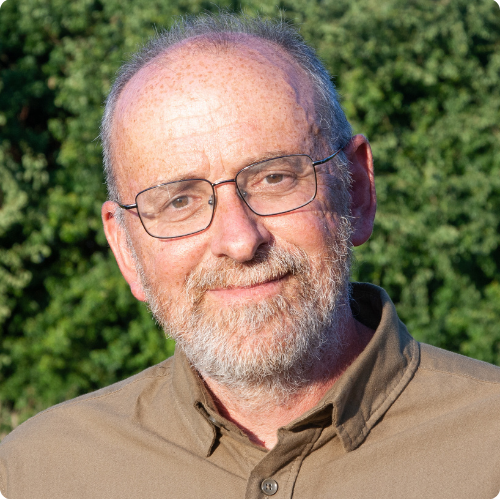
In this talk, Chris describes his journey from academia and permaculture in London to being a smallholder and market grower and, most recently, author of the book Finding Lights in a Dark Age. He describes his attempt in the book to chart a path out of the present and coming crisis through local resilience and livelihood-making, grounded in lessons from past and present agrarian societies along the lines of the permaculture principles ‘Earth Care, People Care, Fair Share’.
Profile
Chris Smaje co-runs a small farm in Somerset and was a full-time market grower supplying a small local veg box scheme for four years. Previously, he was a social scientist working at various universities. He’s the author of three books – A Small Farm Future; Saying No to a Farm-Free Future; and, Finding Lights in a Dark Age.
Medicinal forest gardening by design – staying healthy with sustainable plant resources
Anne Stobart
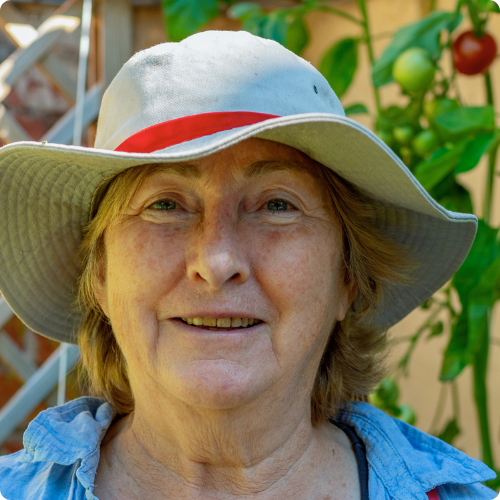
Forest gardens can offer fantastic resources for health, from eating well to promoting mental health and treating common ailments. Beyond herbs there is much potential for health in trees and shrubs. As a medical herbalist Anne Stobart has considerable experience of growing and using healing plants sustainably. In her talk Anne will explore how to recognise woody plant species that heal and how they may be considered in permaculture design, even in smaller gardens. She will describe native trees and shrubs that provide a range of useful herbal actions from pain relief to wound care. You can hear about further herbal actions to be gained using the bark and leaves of introduced trees from Asia and North America. Find out how these herbal medicines are made into recipes for safe use, including cough remedies and digestive teas. With harvesting and safety advice, Anne will help to get you started on selfhelp for health with plants on a sustainable basis.
Profile
Anne Stobart is an independent herbal grower, practitioner and researcher based in Devon, UK. She is a leading exponent of medicinal forest gardening with safe and sustainable use of herbal medicines. As a qualified medical herbalist she has provided training in herbal therapeutics for both lay and professional practitioners. After permaculture training in the 1990s Anne explored the potential of forest gardens to grow her own herbal medicines. Eventually she was able to realise her dream with the establishment of a medicinal woodland in North Devon in 2005. The project was based on the transformation of a redundant conifer plantation. The site provided herbal supplies for her clinical practice and inspiration for others in ways to develop a medicinal forest garden. Design aspects are explored in The Medicinal Forest Garden Handbook (Permanent Publications, 2020). A further publication is Trees and Shrubs That Heal (2023) which details 80 species and ways to use them for health. Anne continues to write newsletters as Medicinal Tree Woman and has developed online courses for the Medicinal Forest Garden Trust to promote sustainable cultivation and use of medicinal trees and shrubs.
Rewilding at all Scales
Nicola Peel
If you think Rewilding is only for 3000 plus acres think again. We can rewild ourselves, our back yard or smaller areas by learning from Natures principles.
Nicola has created a 10 acre eco retreat and thriving conservation site which is used as an educational centre. How can we learn from the beavers and other species to create habitat ?
She will also give a short report on Rainforest Savers agroforestry project in the Ecuadorean Amazon.
Profile
Nicola Peel is an Inspirational Speaker, an award-winning Environmentalist, a Solutionist, a Rewilder and a Consultant.
She speaks passionately about the lessons she has learned from over 20 years working in the Ecuadorian Amazon and her deep connection to the natural world. Combining inspiring stories and practical solutions, Nicola provides a vision of another future and what we need to do.
Spending 6 months in an isolated Amazonian lagoon filming the pink river dolphins, she then travelled from the headwaters in Ecuador down the Amazon River to Brazil documenting her findings to produce the documentary, Blood of the Amazon.
Everyone makes a difference with Permaculture
Andy Goldring
There is so much that needs to change, and that can be overwhelming. Many people want to make a difference but don’t know how. How can we make it easier for people to take action? The Permaculture Association has recently decided four key ‘contexts’ within which permaculture is being applied – Our Lives, Homes and Gardens – Community and Neighbourhoods – Regenerative Livelihoods – Settlements and Landscapes, and in this interactive workshop Andy will take a tour around each one with case studies, key benefits, latest evidence, key actions and some questions for you. If you are new to permaculture this will give you an insight into how it is being applied and what you can do to get on your ‘action learning pathway’, if you are an experienced practitioner, come along and share what you have learnt already.
Profile
Andy is Chief Executive of the Permaculture Association, the UK charity that helps more people do more permaculture. He was once a fine art student studying sculpture at Leeds Polytechnic, but soon after came across permaculture and fell madly in love with its blend of ethical purpose, design principles and practical action. You can generally find Andy behind a computer screen, behind the handlebars of his bike or picking fruit on his allotment in Leeds. He is an active teacher and Chair of Leeds Permaculture Network and part of the Imagine Leeds team, developing a city scale initiative that is inventing new ways to get people inventing and co-creating a zero carbon, nature friendly, socially just future.
Introduction to Permaculture: The Garden & Beyond
Rishil Parekh
Permaculture isn’t just about gardening, it’s a way of seeing and designing life. This workshop explores how permaculture’s core ethics and principles can shape how we live – and in turn how we care for the future – through a holistic lens on health, work, and stewardship in an interconnected, rapidly changing world.
Join the discussion to explore:
- Building resilient income systems inspired by planting guilds
- Weaving movement and physical vitality into everyday life
- What a regenerative future could look like for coming generations
An open, practical conversation on designing a lifestyle that is adaptive, grounded, and aligned with the world we want to create.
Profile
Rishil Parekh is a multidisciplinary designer, educator and family man based in northwest London. With a background in fabricating furniture, sets and installations, he currently facilitates technical learning at a university.
Through his practice, Holistic Design & Craft, Rish integrates digital tools with permaculture ethics to design spatial living systems that prioritise wellbeing, sustainability and harmony. His work focuses on creating functional frameworks that encourage long-term vitality for ourselves and future generations.
Introduction to Permaculture
Matt Phillpott
Permaculture is never easy to describe. For some its a way of gardening, for others a guide for living a more resilient and ecologically kind lifestyle, for others its a Systems Design framework. So, what is Permaculture and how can you make use of it in your lives?
In this workshop I will introduce the key ideas of Permaculture and provide a space for us to discuss how it works in our various contexts. I aim to offer inspiration and an opportunity to learn from each other about our shared Permaculture journeys.
Profile
Matt lives in north-east London with his wife, seven-year-old child, and four Quails (plus thousands of worms and dozens of mealworms!). There, he implements Permaculture practices within the limitations of renting. Matt completed his Permaculture Design Certificate in 2023 with Permablitz London and Northwick Park Community Garden and has since helped to teach An Introduction to Permablitzes course and on the Permaculture Design Certificate (PDC). Previously, he looked after chickens in a small semi-urban garden.
Matt works as an independent learning designer and educator mainly in the higher education sector and researches the history of honeybees and beekeeping at https://honeybeehistories.substack.com/.
Introduction to Permaculture
Nat Mady
Nat will give an overview of permaculture, its key design tools and some practical applications. The workshop will be lively and thought-provoking and should give you plenty of ideas for your garden, your balcony or even your lifestyle!
Profile
Nat Mady is a Hackney-based community gardener and permaculturist. Her projects connect people with the natural world, encouraging people to engage with nature in their urban locality. She founded Hackney Herbal – a social enterprise which grows and sells herbal tea, delivers creative herbal workshops and uses its profits to fund free community activities supporting people in Hackney to improve their mental health and wellbeing.
The Science of Garden Biodiversity
Julian Doberski
Gardens are complex places ecologically. Each one is different so there is no single ‘masterplan’ for creating a richly biodiverse garden. Most gardens are also created and managed in a particular way rather than ‘wild’, hence a natural ‘balance of nature’ cannot be sustained. Having said that, in recent years ecologists have started to study the ecology of gardens scientifically. There is now more of a scientific framework – ‘rules’ if you like – for encouraging biodiversity in gardens. We will explore a range of research studies to understand more about the ecology of gardens, garden biodiversity and how certain garden planting and management practices can promote some kinds of wildlife in gardens.
Profile
From a young age I have been a nature enthusiast. A first degree in Zoology was followed by an MSc in Forestry and a rather specialised PhD in Cambridge on fungal diseases of beetles. I then spent over thirty years lecturing at what is now Anglia Ruskin University in Cambridge. My teaching at ARU centred on ecology. Starting during the Covid lockdown, I wrote three short books which all related to areas of my teaching. The three titles are The Science of Compost, The Science of Garden Biodiversity and, most recently The Science of Sewage. All published by Pimpernel/Gemini Press. The compost book provides the basis for today’s presentation.
Going under the microscope with the soil food web
Rebecca Goodall
What happens in soil? What do soil’s microscopic organisms look like? How do they interact? The Soil Food Web is well-known, but to really see its intricate dynamics, the microscope is the most powerful tool. In this workshop Becca Goodall will go deep into soil, how you can identify bacteria, fungi, protozoa, nematodes, and microarthropods, how these organisms contribute to soil vitality and how we can nurture desirable microbes in our compost and soils.
Profile
Becca is a nature enthusiast. Having spent many years working as a winemaker and viticulturist on regenerative vineyards she has a love of all things soil and microbes. She now works in the sustainable wine sector, finding ways to make the industry (from farm to glass) less impactful on the world. Currently studying with the Soil Food Web school, she works alongside vineyards and other projects to rebuild soil health from the ground up.
The SuperSalads Show – daily foraging for our greens
Jo Barker
Can we forage a salad every day? Yes! In this special SuperSalad, sensory, seasonal, slideshow come and See, Touch, Taste, and Hear how we can eat almost every plant, every day of the year, everywhere. Jo holds the unofficial record for ingredients in a salad of over 300. Foraging in our own gardens and locality deepens our connection to our Place.
Profile
Jo has decades of experience as a Permaculture Educator, Designer, Forest Gardener and Forager. Passionate about the ordinary and everyday. Jo holds a Diploma in Applied Permaculture Design and is a Diploma Tutor. Jo is the founder of Future Food Forests CIC and has won awards in Climate Action and Wildlife Garden design.
The wellbeing benefits of keeping chickens or quails
Matt Phillpott
Often, having chickens or quails in your garden can sound like a useful addition to becoming more self-sufficient, especially as we are now living through a cost-of-living crisis. For an initial outlay in housing, food and water containers, its possible to get near-daily fresh eggs and, if you wish, fresh meat. What is often over-looked are the health and wellbeing benefits and opportunities for building and enhancing community.
Keeping birds can better connect you to your outside spaces, foster a stronger connection to nature, keep you company, and provide a useful talking point and connection with neighbours and other members of your community. Most of my examples will be in an urban garden setting but I will also touch on examples of chickens as a unifying factor on allotments, Quails on balconies or indoor spaces.
Profile
Matt lives in north-east London with his wife, seven-year-old child, and four Quails (plus thousands of worms and dozens of mealworms!). There, he implements Permaculture practices within the limitations of renting. Matt completed his Permaculture Design Certificate in 2023 with Permablitz London and Northwick Park Community Garden and has since helped to teach An Introduction to Permablitzes course and on the Permaculture Design Certificate (PDC). Previously, he looked after chickens in a small semi-urban garden.
Matt works as an independent learning designer and educator mainly in the higher education sector and researches the history of honeybees and beekeeping at https://honeybeehistories.substack.com/.
Sewage down the pan: what happens next?
Julian Doberski
The issue of sewage ending up in UK rivers or the sea seems a perennial source of concern in the popular media. This talk doesn’t set out to apportion blame for the current situation, but it does attempt to explain how noxious sewage outpourings are – mostly – cleaned up by sewage treatment. At its best, industrial-scale processing of sewage can return clean effluent to rivers, lakes or the sea – at worst (for a variety of reasons) untreated effluent pollutes and damages aquatic ecosystems. By the end of the talk you should know more about the context of media ‘sewage’ stories and something about the mechanics of ameliorating the impact of the sewage we produce on the environment.
Profile
From a young age I have been a nature enthusiast. A first degree in Zoology was followed by an MSc in Forestry and a rather specialised PhD in Cambridge on fungal diseases of beetles. I then spent over thirty years lecturing at what is now Anglia Ruskin University in Cambridge. My teaching at ARU centred on ecology. Starting during the Covid lockdown, I wrote three short books which all related to areas of my teaching. The three titles are The Science of Compost, The Science of Garden Biodiversity and, most recently The Science of Sewage. All published by Pimpernel/Gemini Press. The compost book provides the basis for today’s presentation.
How to use Natural Dyes: From Kitchen Waste to Cloth
Zoë Burt
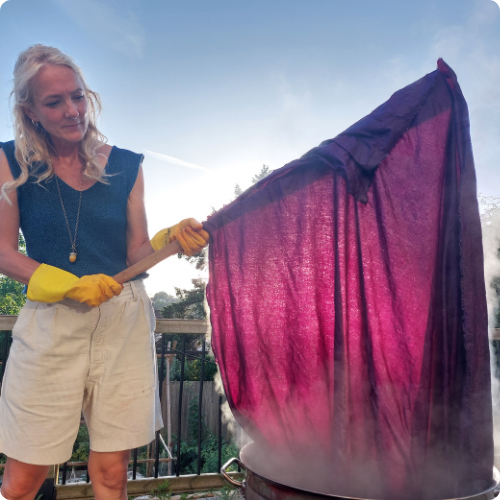
Curious about colouring fabric with plants? Join London-based artist Zoë Burt for an engaging introduction to natural dyeing. Through live demonstrations on cotton and wool fibres, Zoë will show how botanical materials—from heritage dye plants to everyday kitchen waste—can transform textiles into deep, lasting colour. Explore inspiring samples, browse reference books, and learn the essentials of preparing fabrics and expanding your palette using simple kitchen chemistry. Perfect for beginners, this session also points the way to deeper seasonal courses and hands-on experiences.
Profile
Zoë Burt is a London-based artist whose practice explores ecology, imagination, and material culture through drawing, textiles, and plant-based processes. Her work brings together traditional craft and contemporary concerns, using natural materials to foster a deeper connection between creativity, community, and the living world. Through workshops, demonstrations, and collaborative projects, Zoë shares accessible approaches to working with plants, encouraging others to rediscover the creative potential of the natural environment.
Follow @zoeburtuk on instagram for info or visit www.zoeburt.com
How to repair and upcycle your denim clothing
Jahmale

Come and see denim master tailor Jahmale demonstrate how to repair and upcycle your workout/ torn / damaged, pre-loved denim clothing.
Over the two decades he has repaired and rescued more than 15,000 denim items repairing, resizing this has stopped them from going to landfills. Jahmale has been turning old clothing into new clothing for the last two decades, repairing, resizing and customising. Into unique clothing, accessories and soft furnishing ready for a new life, saved from landfill
Profile
Jahmale is a Denim master tailor who established Denim Recon London 20 years ago. He alters and customises denim clothes, repairing, fixing and upcycling them to make new garments that continue to be useful. His ethos centres on the ‘art of reconstruction’: “from something old, I make something new.” He also teaches people how to sew, make their own clothes.
Instagram: @DenimReconLondon
Email: denimmastertailor@gmail.com
Processing natural fibres: nettle, hemp, flax
Allan Brown
Allan will be demonstrating how to turn flax, nettle and hemp from plants into finished garments by hand with simple tools.
Allan Brown is a teacher and maker, advocating a radical revisioning of how we clothe ourselves.
Using foraged nettles, allotment grown flax, waste wool, natural plant dyes and simple tools he is creating his own wardrobe of beautiful and functional clothing that draws lightly from the land.
He is the subject of the film The Nettle Dress and is currently teaching his immersive ‘Grow Your Own Clothes’ course at various venues across the UK.
An Introduction to Sociocracy
Rakesh Rootsman Rak
In a world that constantly pushes us to compete, divide, and distrust, working well together has become one of the greatest challenges of our time. Many of us are trying to build projects, communities, and movements rooted in care for the Earth and each other, yet we often find ourselves stuck in miscommunication, power struggles, or burnout. What if there was a way of organising that actually supports collaboration, shared leadership, and trust?
This session is an introduction to sociocracy, or as I like to call it, “socio-crazy”, a practical and human approach to making decisions and working together more effectively. Through simple principles and real life examples, we will explore how groups can move from frustration to flow, where every voice matters and responsibility is shared. If you have ever struggled in a group, or felt there must be a better way to collaborate, this talk will offer both inspiration and tools you can start using straight away.
Profile
Rakesh Rootsman Rak believes, *’True sustainability begins with self-empowerment and community resilience.’* A permaculture designer, teacher, and reggae DJ, Rakesh has taught over 700 courses since 2009, working across diverse climates, cultures, and communities worldwide. His teaching draws on ancestral wisdom from his Indian heritage, rooted in regenerative practices passed down through generations. As a non-white educator in a field largely dominated by Caucasian voices, Rakesh brings a unique and vital perspective to permaculture, informed by cultural richness and lived experience.
Rakesh’s designs, ranging from small gardens to large eco-villages, blend nature, innovation, and community to create resilient, regenerative systems. He integrates regenerative technologies like biochar stoves, water recycling, and greywater treatment while emphasising the importance of self-sufficiency. His passion is driven by the belief that reconnecting with the land and each other is essential for a thriving planet.
As co-founder of Children and Youth in Permaculture, Rakesh inspires future generations to create ecological balance and community resilience. Whether teaching, designing, or DJing reggae, he brings joy, wisdom, and a holistic approach to his mission of empowering people to transform lives and landscapes regeneratively.
Permablitz London – connecting people with each other and the land
Susannah Hall
Permablitz London is founded on permaculture design principles that has created a flourishing mutual-support network where people of all levels of experience collaborate to design and instal edible, wildlife-friendly spaces across London through permablitzes. This workshop will explore the ethical design approach at the foundation of Permablitz London: an approach that seeks to connect people with each other and the land; that seeks to create a garden city where we grow food and build healthy ecosystems for both people and wildlife.
Permablitzes are at the heart of this ethical approach. They are free days open to all which teach permaculture design in action through implementing a design for each garden. Once you have helped at several permablitzes (usually three) you can have one for your own private or community space. Since we started we have done 150-plus permablitzes involving over 1,000 people of all ages. We have established 8 outdoor classroom gardens and host the London Permaculture Festival at Cecil Sharp House.
Come and find out more about how permablitzing connects people with each other and the land through growing food.
Profile
Susannah Hall is a designer, trainer and facilitator for Permablitz London. She teaches adults and children about the wildlife we find in the city and designs edible gardens that work with rather than against nature.
She is the gardener at Cecil Sharp House and educator at Kentish Town City Farm Community Garden. She has designed a forest garden for Forest Farm Peace Garden and co-designed (with Kayode Olafimihan) the food forest at Northwick Park Community Garden, the permaculture community gardens at Battersea Arts Centre and at London’s Community Kitchen. www.permablitzlondon.com
Reusing Greywater
Hugh Livingstone
The water from your sinks, baths/showers, dishwashers and washing machines (known as greywater) leaves your house where it is mixed with what has been flushed down the toilet (known as black water). This mixture then travels down the same pipe to your local sewage works. However, your greywater can easily be diverted to your garden where it can usefully irrigate the plants you are growing, even providing beneficial nutrients as well as moisture. In this workshop Hugh will show you simple ways to use your greywater both reducing the pressure on sewage systems and saving you money on your water bill.
Profile
Hugh Livingstone is a permaculture designer, trainer and founding member of Permablitz London. He teaches the urban eco-refurbishment and climate sections of Permablitz London’s certificated permaculture design training. He provides consultancy to help people integrate home and garden through permaculture designs and also teaches how to raise poultry in the city and their integration into the household economy.
Composting: going beyond composting our food waste
Susannah Hall
How could we go beyond composting our food waste to use our pee and poo to fertilise our gardens and reduce the amount we are sending to the overwhelmed sewage systems? When we flush our loos the contents gets mixed with greywater and clean rainwater into a single pipe that transports what is now classed as ‘black water’ off to the treatment plant to be processed. Given our urine contains the exact proportion of nitrogen, potassium and phosphorus that plants need and our poo could be composted to feed our soils could we come up with an alternative to flushing these benefits away?
In this workshop Susannah will present a possible way to collect, compost and use our poo and pee. She lives on a narrowboat where she uses a separating toilet, growing veg onboard in planters benefiting from her composted poo.
Profile
Susannah Hall is a designer, trainer and facilitator for Permablitz London. She teaches adults and children about the wildlife we find in the city and designs edible gardens that work with rather than against nature.
She is the gardener at Cecil Sharp House and educator at Kentish Town City Farm Community Garden. She has designed a forest garden for Forest Farm Peace Garden and co-designed (with Kayode Olafimihan) the food forest at Northwick Park Community Garden, the permaculture community gardens at Battersea Arts Centre and at London’s Community Kitchen. www.permablitzlondon.com
Rain Gardens
Jon Bromwich
Living Streets are Green Streets…
…and Green Streets are Living Streets. So much of our public realm has been decoupled from the natural environment by the policies of central government and by local authority Highways or Housing Departments. ‘Green tarmac’ surrounds our housing estates, block paving is the default design choice of Directors of Highways, cheap grounds maintenance is favoured at the expense of wildlife habitat or forage, and natural rainwater is mixed with sewage rather than used for improving our neighbourhoods. But we can fight back through a combination of guerilla gardening and political pressure. Effra Green Streets (part of Lambeth Living Streets) show how Living Streets really could, or perhaps can, deliver Green Streets, Sustainable Drainage schemes and a better public realm.
Profile
Jon Bromwich spent 40+ years as a theatre producer and manager before (part) retiring and turning his creative bent towards the natural world. Through the national charity Living Streets , its offshoot group in Brixton, Effra Green Streets, has built Rain Gardens, a Wildflower Garden, an Orchard and over 60 street planters. It campaigns for low traffic streets and a better street environment.
Simple Herbal Remedies
Roisin Reilly
Roisin Reilly of the Urban Herbalist, will be running a simple herbal demonstration workshop- where you will learn how to make simple herbal preparations.
Profile
Roisin has over a decade of experience as a herbalist. She works locally in London, providing consultations, walks & talks. She has been teaching on the BSc degree herbalism course for 2 years.
Campaign for the Right to Grow

What is the Right to Grow (RtG)? How is it tied to permaculture, biodiversity, and food growing? And how does the campaign build more connected, resilient communities as the planet warms?
Come hear RtG campaigners from Hackney and Tower Hamlets talk about unlocking access to land and turning underused spaces into oases for food and wildlife. They’ll describe how they got started, their achievements, and their most exciting upcoming plans. They’ll also highlight how the RtG fulfils the three ethics at the heart of permaculture: Earth Care, People Care, and Future Care.
Would you like to start or join a RtG campaign in your borough – or be part of the London-wide movement? Then join us. Bonus: Camden residents will be able to sign up for the imminent launch of a Camden RtG group! The event will be chaired by Rachel Dring of Capital Growth.
For info: https://www.incredibleedible.org.uk/what-we-do/right-to-grow/
To join the RtG WhatsApp group: https://chat.whatsapp.com/INbP4Yb5gdC5GgMYw6gLMQ


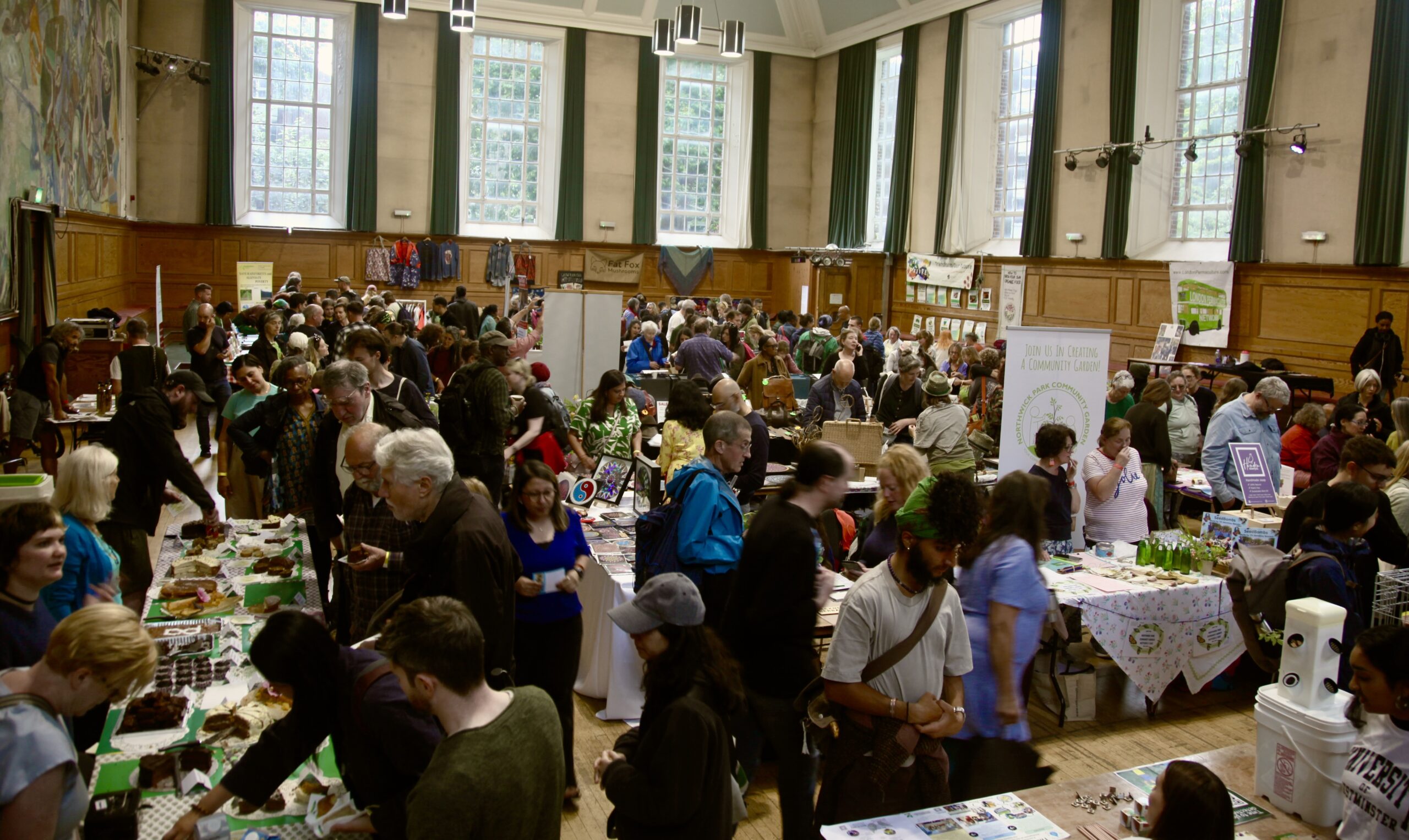

The annual London Permaculture Festival is a one day grassroots event that attracts around 600 people who come to learn about how the ethical design science of permaculture can offer sustainable, regenerative green solutions to different areas of modern life. Each year we host many workshops, delivered by experts in their field. These broadly cover, as illustrated by his Permaculture Design System Flower, what permaculture co-originator David Holmgren has identified as, ‘the key domains that require transformation to create a sustainable culture.