The annual London Permaculture Festival is a one day grassroots event that attracts around 600 people who come to learn about how the ethical design science of permaculture can offer sustainable, regenerative green solutions to different areas of modern life. Each year we host about 20 workshops, delivered by experts in their field. These broadly cover, as illustrated by his Permaculture Design System Flower, what permaculture co-originator David Holmgren has identified as, ‘the key domains that require transformation to create a sustainable culture.’

Workshops in 2024 were:
2024 Timetable here
The resilient garden and allotment – Sally Morgan
What’s Got Into You? How Pollution is Damaging our Health and what we can do about it? – Dr Jenny Goodman
Rewilding the Land, Rewilding Ourselves – Maddy Harland
Tiny House Living – how to design, self-build and live in a nomadic regenerative tiny home? – Ed Dale-Harris
The joys of community forest gardens – Rakesh Rootsman Rak
What is Nature and how can we learn from the intelligence all around us? – Nicola Peel
In harmony with Nature: an introduction to permaculture – Andy Goldring
Introduction to permaculture – Nat Mady
Introduction to permaculture – Rishil Parekh
Demystifying Composting – Camila Barboza
Cavendish Living Lab – Dr Pooja Basnett and students from the University of Westminster
Unusual edible perennials: top forest garden plants – Eleri Kyffin and Rishi Shah
Permaculture and the indigenous: holding an edge – Kayode Olafimihan
Using wicking and self-watering systems – Than Gunabalasingham
Sustainability and Creative Ways to Refashion Clothing – Zoë Burt, Jahmale and Allan Brown
Keeping chickens in the city – Matt Phillpott
Permaculture balcony design to maximise yield – Susannah Hall
Fungi: recycling household waste into food and medicine – Lex & Ben from Fat Fox Mushrooms
Permaculture for everyday: in your life, home and relationships – Jo Barker
Simple home retrofits to reduce waste and save money – Hugh Livingstone
The resilient garden and allotment
Sally Morgan

My talk is about building resilience in the garden in the face of climate change. Soil is key to a resilient garden – for building healthy soils that sequester carbon, support a diverse web of life and produce healthy plants that are well placed to cope with stress, pests and disease. I look at the types of plants we should be growing to encourage biodiversity and ways of attracting natural predators plus a delve into the world of plant relationships, both with each other and with fungi.
Sally Morgan is a botanist and restoration ecologist who has been has writing about environmental issues, such as climate change, for 30 years. She is a keen organic, no-dig gardener who likes to experiment and, in common with most gardeners, has seen how unpredictable things are becoming. Her aim is to create a resilient and biodiverse garden that can cope with the extremes – deluges and droughts and more. She is not a gardener to spend hours in the garden tending and tidying, but has a more hands off approach. She was editor of the Soil Association’s Organic Farming mag for 12 years and currently writes for magazines such as Amateur Gardening and Bloom. She has written numerous books including The Climate Change Garden, The Healthy Vegetable Garden, and Living on One Acre or Less.
What’s Got Into You? How Pollution is Damaging our Health and what we can do about it?
Dr Jenny Goodman

There is an environmental crisis and there is also a health crisis – an epidemic of chronic, degenerative diseases that were rare or unknown before the industrial revolution. The causes of both these crises are the same: the toxins produced by the petrochemical industry and sprayed onto our fields, released into our water and air, and thence into our bodies. If pesticides are in the soil, they’re on your plate. If essential nutrients are missing from the soil after decades of intensive over-farming , they’re missing from your dinner. As an environmental physician, I have seen countless sick people poisoned by pesticides and other industrial chemicals, but I have also seen them get better. There are ways to protect ourselves from the sick-making pollution around us – that’s the personal aspect – and there are also ways we can actually reduce the production of these highly profitable poisons, by concerted consumer pressure and political action.
Jenny Goodman is a medical doctor, author, lecturer and broadcaster, living in London. Disillusioned with conventional medicine’s inability to heal sick people, and its failure to enquire about the causes of illness or to do preventive healthcare, she left. She then lectured extensively, both on medical sciences to practitioners of alternative medicine, and on topics such as women’s health and the politics of health to the general public in adult education classes.
Having studied the environmental history of hundreds of patients, she is now deeply committed to explaining the bigger picture – that what we are doing on our farms and elsewhere on our planet profoundly affects the food we eat, the water we drink and the air we breathe, and therefore affects the health of our bodies and minds. This could be summed up as a transition from Pharma to Farmer (Jenny does have a small allotment).
Jenny is the author of two books: Staying Alive in Toxic Times: A Seasonal Guide to Lifelong Health and Getting Healthy in Toxic Times: An Ecological Doctor’s Prescription for Healing Your Body and the Planet”, published in July 2024 by Chelsea Green. This book explains the role of environmental pollution in creating our current epidemics of chronic, degenerative diseases, all of which are preventable if we can clean up our act on Mother Earth.
Rewilding the Land, Rewilding Ourselves
Maddy Harland

Is rewilding a do nothing, Zen activity or does it have a set of principles and distinct practices? Can we predict the outcomes? Can it be done on a small scale and in the city? And how does it fit in with permaculture?
Maddy explores practical rewilding big and small, and how we can rewild the spirit wherever we live. Learn to strengthen your health and inner resilience so we can face contemporary challenges like escalating climate change and collapse.
Maddy Harland is the co-founder and editor of the quarterly Permaculture Magazine. Over the past 30+ years she and husband Tim published over 120 books via Permanent Publications. These include best-selling permaculture, no-dig and forest gardening titles which has taken the permaculture message worldwide. Maddy is the author of Fertile Edges – regenerating land, culture and hope.
She loves wild landscapes and creatures, growing food, and hanging out with her family in north London..
View Permanent Publications titles here: https://www.permanentpublications.co.uk/ •
Permaculture Magazine: https://www.permaculture.co.uk/
Tiny House Living – how to design, self-build and live in a nomadic regenerative tiny home?
Ed Dale-Harris

In his talk Ed will be showcasing how to design, build and live in a regenerative Tiny House. He will take you through the process from setting out your brief, to 1:1 prototyping and final construction. His talk will show you how to balance cost, time and quality in a Tiny House project, as well as the freedoms and challenges of creating such a home. Perhaps most importantly though Ed will demonstrate how we can build more regenerative systems in which we can live in harmony with ourselves and our global ecologies.
Ed is an ARB Architect and Permaculture Designer. In 2014 he founded SAWA with Enock Ruziga, whilst working together on the ‘a house for a victim’ project in Rwanda. SAWA was built on nature based design principles that aim to re-birth critically important indigenous wisdom. It focuses on using local materials and labour to create vibrant community spaces for both humans and non humans. SAWA has worked across Asia, Africa, and Europe, winning the AJ100 Best Collaboration of the Year 2018 for its Agri Tech Centre in Cambodia.
Since 2022 Ed has been living and working from a Tiny House of his own. It has been towed from farm to farm, project to project, displaying the joys of regenerative living wherever it goes. His Tiny House allowed him to live in close proximity to his projects and take a very hands on approach. This year Ed has moved to Builth Wells, Wales were he hopes to settle down and start building roots in the local community.
The joys of community forest gardens
Rakesh Rootsman Rak

Rakesh Rootsman Rak
During this conversation we will discuss
What is a forest garden
What are the benefits to people
What are the benefits to nature
Where can we find examples
How do we get started
If you have a community forest garden or want to start a community forest garden, or just want to find out more, please come along and so we can share the joys of community forest gardening.
Rakesh Rootsman Rak is an accomplished permaculture designer, teacher, forest garden specialist, yoga instructor, homeopath, and reggae DJ. Since 2009, Rakesh has been dedicated to teaching vegan permaculture to individuals and communities, having instructed over 500 courses on a wide array of topics, including forest gardening, sociocracy, eco-village design, and holistic life design. His extensive design portfolio spans from small gardens to large-scale farms, urban community food spaces, and eco villages, integrating sustainable technologies such as biochar cook stoves, rocket stoves, and pedal-powered generators. Passionate about self-empowerment, Rakesh promotes skills in eco-architecture, energy capture, and water recycling systems. As a founder of the Children in Permaculture project, Youth in Permaculture, and the Roots n Permaculture learning community, he continues to inspire through his diverse expertise and holistic approach to sustainable living.
https://campsite.bio/rakesh
In harmony with Nature: an introduction to permaculture
Andy Goldring

Andy is Chief Executive of the Permaculture Association, the UK charity that helps more people do more permaculture. He was once a fine art student studying sculpture at Leeds Polytechnic, but soon after came across permaculture and fell madly in love with its blend of ethical purpose, design principles and practical action. You can generally find Andy behind a computer screen, behind the handlebars of his bike or picking fruit on his allotment in Leeds. He is an active teacher and part of the Climate Action Leeds team, developing a city scale initiative that is inventing new ways to get people inventing and co-creating a zero carbon, nature friendly, socially just future.
Introduction to permaculture
Rishil Parekh

Join us to discover some core principles and practices of permaculture, with an overview of the design approach and examples of it’s application of projects. Inspiration for your own permaculture journey, and ideas for how to get started.
Rishil Parekh’s background in fabrication for furniture, art and theatre, blended with his studies in permaculture and health and wellbeing, birthed Holistic Design & Craft. Working on community as well as residential projects to create spaces and objects that interact in harmony with our environment.
Introduction to permaculture
Nat Mady
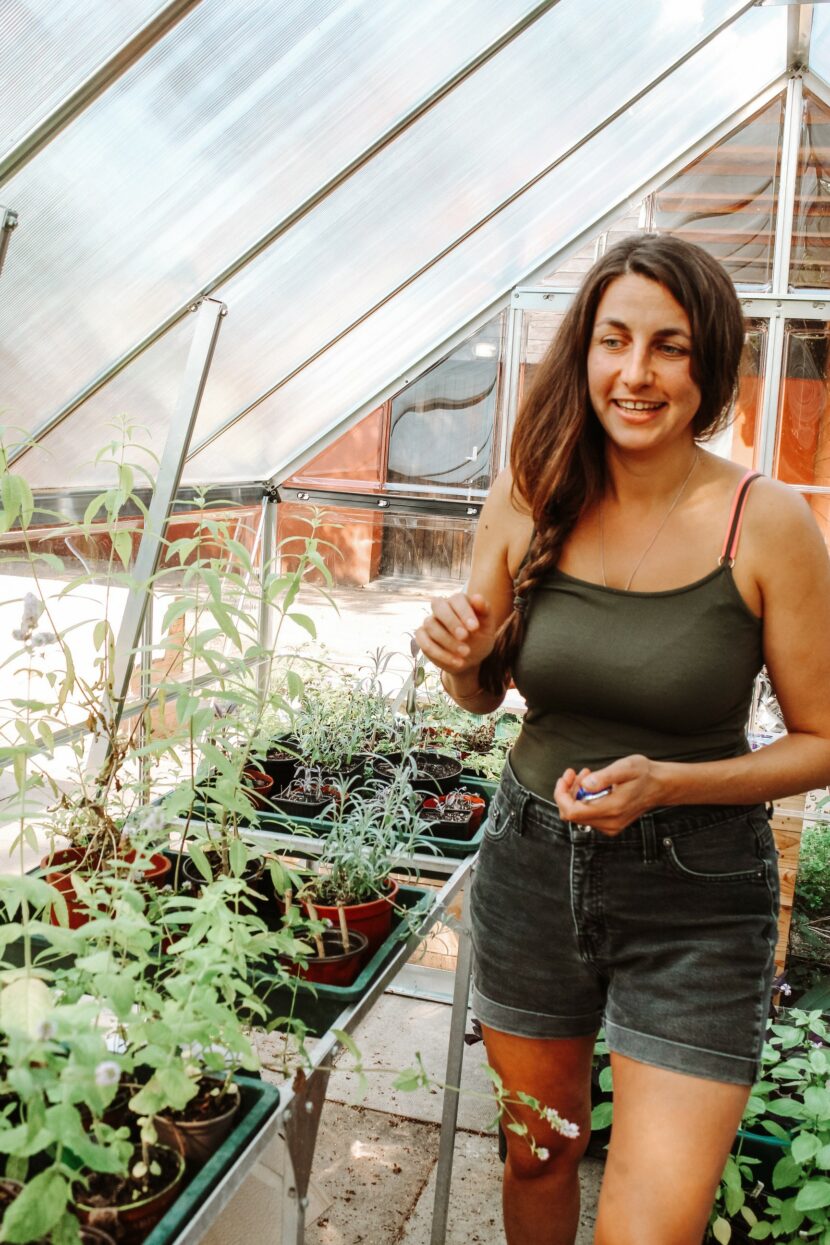
Nat will give an overview of permaculture, its key design tools and some practical applications. The workshop will be lively and thought-provoking and should give you plenty of ideas for your garden, your balcony or even your lifestyle!
Natalie Mady is a Hackney-based community gardener and permaculturist. Her projects connect people with the natural world, encouraging people to engage with nature in their urban locality. She founded Hackney Herbal – a social enterprise which grows and sells herbal tea, delivers creative herbal workshops and uses its profits to fund free community activities supporting people in Hackney to improve their mental health and wellbeing.
What is Nature and how can we learn from the intelligence all around us?
Nicola Peel

Nicola Peel is a Solutionist who has spent over 20 years initiating projects in the Ecuadorean Amazon. She will update us on her agroforestry project to prevent deforestation and an overview on biomimicry – the conscious emulation of lifes genius.
Nicola Peel has been working for most of her adult life on addressing environmental problems and finding solutions. She has co-founded the Amazon Mycorenewal Project bringing together scientists from around the world to the Ecuadorian Amazon to explore the use of mycoremediation (fungi to break down petroleum contamination). After discovering the benefits of building with eco-bricks (empty plastic bottles filled hard with inorganic rubbish) Nicola has helped in building a restaurant, health centre, school and numerous walls and benches. She is a winner of the Peoples Environment Award and a finalist in the Guardian Observer Ethical Awards
Demystifying Composting
Camila Barboza
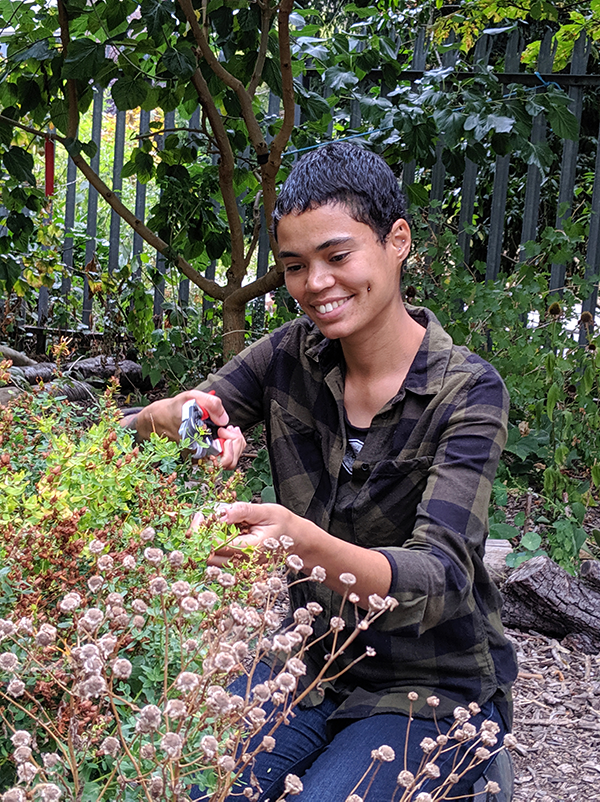
Composting is a wonderful way to transform organic ‘waste’ into a valuable resource. In this workshop, we’ll demystify the process and explore its intricacies – from the different organisms that make it happen, to how it can be used for so much more than garden waste – from leftover food to humanure!
Camila is a food and herb grower, holistic gardener and forager. With a background in urban food growing, she currently works at Hackney Herbal spreading the love for plants, soil, and the natural world through community gardening, courses, and workshops. She lives off-grid as a continuous cruiser on a narrowboat, where she composts and makes the most of all her organic waste, from kitchen scraps to humanure.
Cavendish Living Lab
Dr Pooja Basnett and students from the University of Westminster

The Cavendish Living Lab is a vertically integrated project focused on building sustainable solutions to address food, plastic, and water waste on the Cavendish campus at the University of Westminster. The project investigates ways to reduce and repurpose waste. As a result, collected food waste was transformed into biofertiliser and used in hydroponic systems to grow food on campus, which was donated to the local food bank, showcasing a circular model. The production of biopolymers from waste was also explored and its applications were proposed. Integration of artificial intelligence use in the project is currently being implemented, and the upcoming strand will focus on wastewater.
The project brought together students from different levels and disciplines, as well as academics, Westminster’s Estates Department, and external stakeholders. The group is passionate about sustainability and reducing waste. By researching and exchanging ideas and knowledge, we learn and collaborate in authentic settings and establish practical solutions to the current waste problem.
Unusual edible perennials: top forest garden plants
Eleri Kyffin and Rishi Shah

Come and join Eleri and Rishi in a workshop where they will guide you in exploring their top unusual, edible perennials for forest gardens. Additionally, you will have the chance to sample some of the featured perennials. Eleri and Rishi will also share their experiences with food forest gardens at Northwick Park and Capel Manor.
Rishi Shah is deeply passionate about permaculture, having completed two design courses and pursuing a level 2 certification in forest garden design. His journey began in his local country park, where through volunteering with a conservation group he discovered the beauty of nature and the importance of all things being interconnected. Taking a year to travel across the UK, Rishi explored various permaculture sites, enriching his understanding of sustainable living.
Currently, Rishi works as a horticultural apprentice at Capel Manor Gardens, London’s leading land-based college. He has been involved in setting up a forest garden which will be a showcase for students learning horticulture and garden design at the college. His goal is to share his passion for permaculture and forest gardening, inspiring others to reconnect with nature on a deeper level.

Eleri Kyffin is a trustee of the Northwick Park Community Garden charity. Since its establishment in 2018, it has been developed as a permaculture food forest garden that promotes sustainable and ecological gardening practices. Eleri, along with other trustees, Susannah Hall, and a core group of volunteers, have been making this garden a reality. The charity received funding to run a Permaculture Design Course for 30 students in 2022. This course aimed to develop skills and empower participants to replicate these practices in their communities.
Eleri is applying the insights and design from her permaculture design coursework at Northwick Park Station’s platform, which the charity took on in 2023. The initiative to transform the station platform into a permaculture garden reflects the charity’s innovative approach to urban greening, repurposing unconventional spaces for ecological and community benefit. Eleri and the charity are considering extending their green influence on the next station platform along the Metropolitan line.
Besides her work with the charity, Eleri is also a manager of the Academic Engagement Team at the University of Westminster. She is developing her garden along permaculture principles and is a big fan of natural dyeing.
Permaculture and the indigenous: holding an edge
Kayode Olafimihan
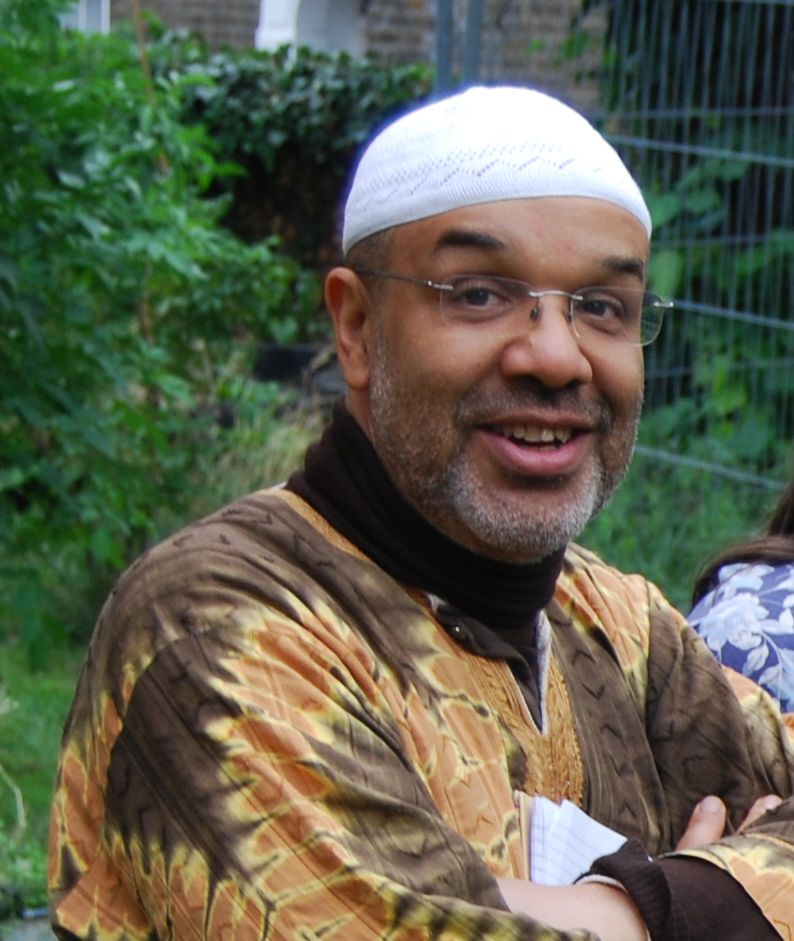
This workshop will explore holding an edge between the modern secular design science of permaculture and old, indigenous ecological understandings. It will highlight bringing permaculture ethics and principles together with traditional north-west European folklore and west African sacred literature with particular reference to an active conservation project, Eels in Schools, as well as a decade of developing community mutual support network, Permablitz London.
Kayode Olafimihan is a permaculture designer and teacher. He has designed the award-winning permaculture LAND project at grade II listed Cecil Sharp House in Camden, London where the festival is being held.
Kayode Olafimihan is a permaculture designer and teacher. He is the founder of Permablitz London, a mutual-support network which connects people with each other and the land through growing food. (Permablitzes are free days open to all which teach permaculture design in action through implementing edible, wildlife-friendly garden designs. Once you have helped at several permablitzes, usually three, you can have one for your own private or community space. Since the network started 10 years ago there have been 120-plus permablitzes involving over 1,000 people of all ages and cultures and it has established 8 outdoor classroom gardens.)
Using wicking and self-watering systems
Than Gunabalasingham

Water is essential to life. But our current systems are placing huge stress on water resources. How we use water will increasingly define how we grow food in a changing climate. How can we collect, store and manage water in sustainable, low-maintenance ways to grow abundant food in urban spaces? This workshop will explore the principles of water management in small spaces, with a focus on self-watering containers and wicking techniques.
Than is a horticultural tutor, forest gardener, forager and all round plant enthusiast. Having worked for some years in sustainable food policy research, he has turned to the land, creating and teaching about resilient food systems. Most of all he is passionate about restoring wild spaces and creating productive edible landscapes that mimic the principles of nature. He is currently a freelance educator for Nourish the Wild, partnering with organisations including The Orchard Project and OrganicLea.
Sustainability and Creative Ways to Refashion Clothing
Zoë Burt, Jahmale and Allan Brown

Jahmale of DenimRecon London, Allan Brown of The Nettle Dress and Zoë Burt Textile Artist talk about their practice and showcase ways to imaginatively refashion, plant dye/print and grow your own clothing sparking inspiration for creative present and post fossil fuel design futures.
Zoë is a Textile Artist connected to and inspired by Nature. who grows and works with plant dyes/prints and cyanotype. In 2017 she collaborated with Permablitz London who designed the ever evolving working dye garden at Morley College as an outdoor classroom. Other collaborative projects have involved growing a garment from seed in an urban environment transforming flax into London Linen.
Jahmale is a Denim master tailor. Who has Taught at London Collage of Fashion. Lead back stage machinist for Paris fashion week for 4 years. He established Denim Recon London 20 years ago. To showcase & sell his creative designs. He Makes Jeans / Alters and customises denim clothing and repairing, fixing and upcycling them to make new garments that continue to be useful. His ethos centres on the ‘art of reconstruction’ & Sustainability “from something old, I make something new.” He also teaches his own Sewing & Pattern classes Every Thursday. Teaching attendees how to use a sewing machine Alter / repair / pattern cutting sewing skills to make their own clothes.
Allan Brown is a textile artist and creator of the nettle dress. From local sheep fleeces, foraged nettles and allotment grown flax and dye plants, Allan creates simple clothing that borrows lightly from the Sussex landscape he lives and works in. Slowly taking these natural raw materials through into finished garments, entirely by hand, Allan imagines what hyper localised, post fossil fuel cloth production may look like. Clothes that emerge from and dissolve back into the soil they came from.
Keeping chickens in the city
Matt Phillpott

How do you keep chickens as part of a Permaculture garden, especially in a city? In this workshop, Matt will delve into the practical aspects of poultry care, including space provision, legal requirements, designing a secure and comfortable habitat that allows chickens to exhibit their natural behaviours, and feeding strategies which include the types of plants that you can grow and cultivate to add to their diet and ensure their well-being. Additionally, Matt will address the crucial topic of safeguarding your chickens from potential predators, break down some of the typical costs, and consider exactly how poultry fit into a Permaculture system on a small scale.
Matt fell in love with chickens when he and his family started to manage three of them in his back garden. Over the years the flock grew in number and for a long time included a bolshy cockerel ironically named Monk. Matt has experience managing chickens, dealing with broody hens, caring for young chicks, and going to war with a hen who refused to respect fences! He completed his Permaculture Design Certificate in 2023 with Permablitz London and Northwick Park Community Garden and works as an independent learning designer mainly in the higher education sector. He lives in north-east London with his wife and child.
Permaculture balcony design to maximise yield
Susannah Hall

In designing her sixth-floor balcony Susannah wanted to maximise how she could use the space. The design meant she was able to use the balcony to grow sixty different plants; keep four quails that provided all the eggs she needed as well as company and much enjoyment; have a wormery to compost kitchen waste and space for natural dyeing. Her balcony won Camden in Bloom Best Mini-Garden in 2021. This workshop will outline the design and thinking behind creating this beautiful, multi-functional tiny outdoor space.
Susannah Hall is a designer, trainer and facilitator for Permablitz London. She teaches adults and children about the wildlife we find in the city and designs edible gardens that work with rather than against nature.
She is the gardener at Cecil Sharp House and educator at the Josiah Braithwaite Community Garden and Kentish Town City Farm Community Garden. She has designed a forest garden for Forest Farm Peace Garden and co-designed (with Kayode Olafimihan) the food forest at Northwick Park Community Garden and the permaculture community gardens at Battersea Arts Centre and at London’s Community Kitchen. www.permablitzlondon.com
Fungi: recycling household waste into food and medicine
Lex & Ben from Fat Fox Mushrooms

Mushrooms are the world’s greatest recyclers. Without them the earth would be drowning in un-decomposed organic material and deprived of the carbon rich soil that supports life. This workshop will give you an insight into the lifecycle of fungi and show you how to create a simple system to grow delicious mushrooms for food and wellbeing in your home on some common household waste materials. This workshop is suitable for beginners and covers the life cycle of fungi and its role in nature and how to recreate the optimal conditions for growth at different stages.
We’re Lex & Ben from Fat Fox Mushrooms. We run a small urban mushroom farm in Tottenham, Northeast London. We grow medicinal mushrooms, make grow kits that make the process of growing mushrooms at home easy and foolproof and run mushroom growing and other fungi-related workshops. We’re interested in sharing our love of mushrooms and in making the process of growing mushrooms accessible to more people. We’ve recently launched The Fungi Room in North London, an immersive mushroom grow space dedicated to showcasing the incredible role fungi play in our interconnected ecosystem – where visitors can witness the magic of mushrooms and delve deeper into the fascinating world of fungi.
Permaculture for everyday: in your life, home and relationships
Jo Barker

How ordinary, everyday life is the easiest and most significant place to practice Permaculture because this is where we are and our impact is the greatest. This is a holographic look at Permaculture through the lens of the Ordinary and Everyday. And happens to be a great Introduction too.
We will explore Permacultural patterns and principles for the basic everyday stuff of how we eat, how we live in our homes and relate to each other. Even basics such as how we breathe can bring us chemical free medicine and health as well as bringing us closer to our more natural human selves. Solutions are mainly common sense, often save us money, bring more wellbeing and are a win-wins for natural systems. Whats not to love? Inspired by David Holmgren’s RetroSuburbia: the downshifter’s guide to a resilient future for climate action, biodiversity, future food security and wellbeing.
Jo has decades of experience as a Permaculture Educator, Designer, Gardener, Healer and Forager. Including 100’s of Urban and rural community projects. Jo holds a Diploma in Applied Permaculture Design. Jo is the founder of Future Food Forests CIC and has won awards in Climate Action and Wildlife Garden design.
Simple home retrofits to reduce waste and save money
Hugh Livingstone

This workshop will look at practical steps to redesign your home – making it more comfortable, cheaper to run and better for the environment. We will look at energy efficiency, renewable energy options, water conservation and re-use; all aiming to reduce waste and save money.
Hugh Livingstone is a permaculture designer, trainer and founding member of Permablitz London. He teaches the urban eco-refurbishment and climate sections of Permablitz London’s certificated permaculture design training. He provides consultancy to help people integrate home and garden through permaculture designs and also teaches how to raise poultry in the city and their integration into the household economy.