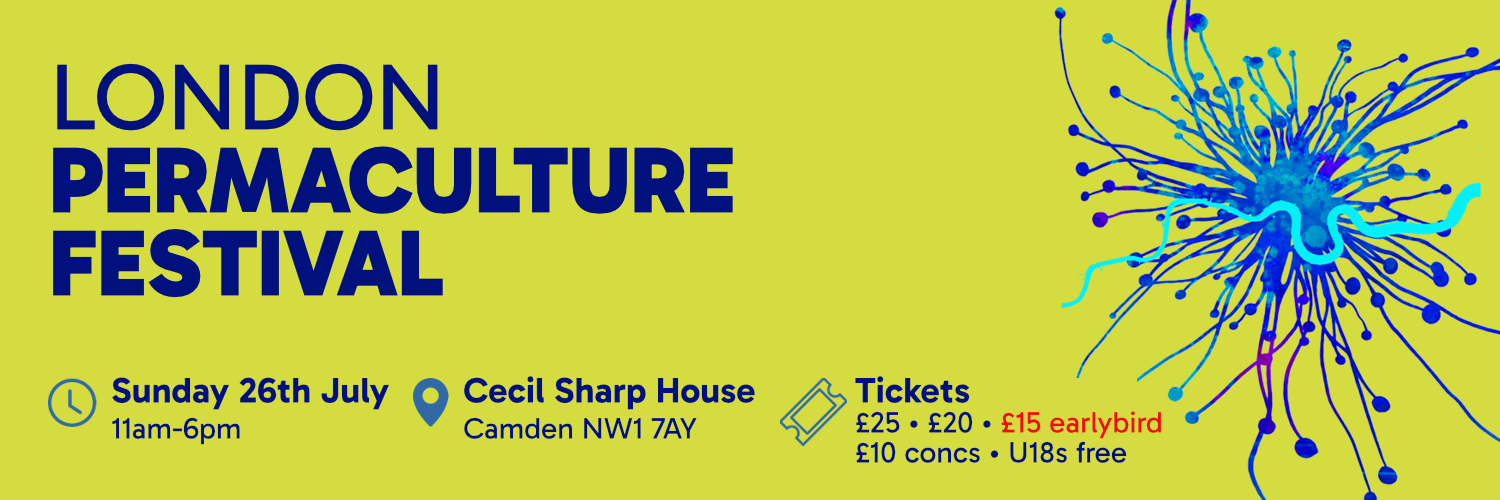
Workshops in 2015 will include:
Big Picture Permaculture – Inspirational projects near and far!
Maddy Harland, Editor Permaculture Magazine
From rainforest restoration, to regenerative agriculture, locking up carbon and building the soil, plus perennial vegetables and other interesting tasty edibles, Maddy Harland, editor of Permaculture magazine, shares stories and insights into the big picture of Permaculture around the world. Permaculture Magazine • Permanent Publications
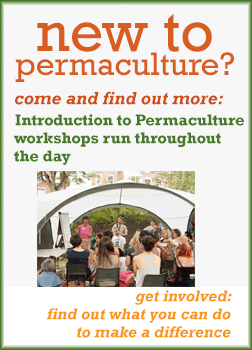
Introduction to Permaculture will run through the day
Shamaila Akram
A brief interactive introduction to permaculture.
Randy Mayers
During my Presentation I will cover the basics of Permaculture. The building blocks of for conscious design and living in harmony with the planet and all its’ inhabitants. I will touch on ethical and ecological principles, some design tools and some ways to get started on your very own Permaculture journey.
plus presentations by Natalie Mady and Chloe Anthony
Permaculture’s Next Big Step
Andy Goldring
Andy Goldring will report on the wonderful world-wide permaculture network and what we have found out over the last six months of mapping, surveying and interviews. An incredible picture is emerging of a powerful network that is working across the world in exciting and innovative ways. The session will give an overview of findings so far and share plans to help permaculture develop its ‘Next Big Step’ at the 12th International Permaculture Convergence this September. www.permaculture.org.uk
Wildlife Gardening
Kate Bradbury
Author of The Wildlife Gardener, Guardian writer and occasional presenter on Radio 4’s Gardeners’ Question Time. www.theguardian.com/profile/kate-bradbury • twitter.com/kate_bradbury
The Barefoot Beekeeper – practical & natural beekeeping in top bar hives
Phil Chandler, author of The Barefoot Beekeeper (now in it’s 4th edition)
Learn about ‘balanced beekeeping’ in top bar hives: a simple, practical, chemical-free way to have healthy and happy bees in your garden, with the possibility of your own honey harvest, but without the cost and complications associated with conventional beekeeping. Phil will follow up this workshop with a practical presentation at his biobees stall demonstrating the kind of simple equipment that you can make at home to get you started on low-impact, low-cost, beekeeping. www.biobees.com
Green Roofs
Lee Evans
Owner of Organic Roofs, winner of National Federation Roofing Contractors green roof of the year 2015. www.organicroofs.co.uk
Best crops for pots
Mark Ridsdill Smith, Guardian writer, founder of Vertical Veg
In a small space, the choice of what to grow is critical – and there are many brilliant edible crops outside the traditional veg like broccoli and parsnips. This workshop would explore the inspiring options of whats possible in containers depending on what sort of garden you want to create. We’ll look at themes like: beauty, low maintenance, highly productive, herbs (including unusual ones), making a statement (or community talking point), salad, climbers, and the fruit container garden. www.verticalveg.org.uk
Sneak preview of the International Permaculture Convergence & Conference
Alan Thornton and Andy Goldring
In two months time the world of permaculture is coming to London for some unmissable events. This session will give an enticing overview of who and what is going to be happening. This is a once-in-a-generation opportunity with the biggest and most diverse permaculture gathering coming to our city. You’ll also find out how you can take part even if you can’t afford the time or money to attend the whole of the conference or convergence. International Permaculture Convergence
Seeds of Fashion – Grow a garment
Zoë Burt and Kate Poland
We will be telling the story of a piece of clothing grown, harvested, processed, designed and made completely in London. It took a year and more than 500 people to complete it so we’ll be talking about how we got it done.
Zoë Burt is an innovative and collaborative textile designer, camera-less photographer and award-winning artist. She was trained at St Martin’s School of Art and designed for fashion labels for 17 years. In response to working in the fast fashion industry she was inspired to see if it was possible to grow a garment within the M25. She runs arts projects and creative workshops at her studio and the Tate, Garden Museum, the RHS and South London Botanical Institute. From September will be the advanced textile tutor at Morley College.
Kate Poland founded and runs an award-winning community garden. With Nat Mady she set up the community enterprise, Cordwainers Grow. They organise and run garden-related workshops and events to promote volunteering and engagement with the environment and community. They collaborate with community and schools groups, artists – such as Turner-prize nominees, Assemble – architects, and organisations such as the RHS and Kew Gardens.
Grow a Garment was runner up in the national Epic Awards 2015 and has been shortlisted for the national Green Gown awards.
cordwainersgarden.wordpress.com/2015/01/31/we-grew-a-garment/
Soil as a living ecosystem
Sue Amos
A closer look at soil: What is soil? What is a good soil and how can we make it? Soil analysis. We’ll investigate the properties of soils and how we can work with soil to make it healthy productive and sustainable. You’ll learn;
- What soil is made of
- How to check soil types
- How to build and create soil
- How to preserve and protect soil
Sue Amos has been a gardener in London for over 20 years. Steeped in permaculture, she promotes healthy and balanced soil as the fundamental of healthy growing and creating balanced systems in gardens. At Glengall Wharf Garden in Peckham, she is managing several giant hugel mounds and creating soil in a new forest garden.
Urban Permaculture In Action – Diploma accreditation session
Ruth Robinson, Juliet Kemp and Liz Darley
Ruth, Juliet and Liz will present their designs for the Diploma in Applied Permaculture and answer questions about the whole experience
Singing Circle
hosted by Robin Grey
Singing Circle hosted by Robin Grey from Three Acres and a Cow: Come and share a topical song about the land, radical history, nature etc and/or just come and join in…All welcome. Robin devised and performs a show called ‘Three Acres And A Cow, A History Of Land Rights And Protest In Folk Song And Story‘, has been undertaking musical cycling pilgrimages under the rubric of ‘Pedal Folk‘
Come and Meet My Hens – Urban chicken-keeping
Owen Griffiths
Building with Bales
Eileen Sutherland
This talk will introduce you to building with straw bales, describing the building methods, the advantages of using straw and how this method of building could provide affordable houses for the future. Finally, there will be an invitation to get involved and learn through the School of Natural Building. www.strawworks.co.uk/
Transition and Permaculture
Ros Bedlow and Samantha Woods
There are clear links between Permaculture and Transition. Rob Hopkins, founder of the Transition movement, himself a Permaculture teacher, identifies permaculture as “one of the principle foundations of the Transition concept”.
Before registering a new Transition Initiative with the Transition Network, it is recommended that one or two members of the core group attend a permaculture design course. However, as time passes those involved at the outset are likely to move on, and people now taking leadership roles may no longer have ‘Permaculture eyes’.
Getting started with Worm Composting
Paul Richens
Come and meet some working worms and see them turning kitchen waste into plant food. Paul Richens gives you a chance to get hands-on with a wormery as he explains how you can set one up and maintain it. He will go through what kind of foods the worms like and the kind of conditions that are best for them. He will demonstrate the difference between vermicompost, humus and mineral soil and explain how and why the vermicompost can make such a huge impact on the growth of your plants. Blue Dome Synergies
Edible Forest Gardening
Kevin Mascarenhas
Forest garden design packs useful species into a small area to create an intensive and highly productive system. Learn how by design, a tree system can provide a diverse range of foods, requiring little maintenance and with few offsite inputs. www.naturalflow.biz
Herbal Medicine for Common Ailments in a Modern World – How to make a medicinally infused oil and cream
Sarah Gray (Herbalist) and Rasheeqa Ahmad (Hedge Herbs) – From the Gone Wild Herb’s Collective
Projects people want to be part of – what works
Anna O’Brien
Practical Tips from our Urban Permaculture Garden
Cecilia Litvinoff and Pamela Bhanvra Adams
A garden of any size can be a paradise full of edible and wildlife friendly plants. This workshop will discuss: Planting for bees and butterflies; sourcing sustainable materials; dealing with difficult soils; making the most of the available space – roofs, walls, window sills – and water harvesting. But most crucially, we will show how to integrate all these elements in order to create a vibrant and productive garden. Come and find out how to get started.
Edible Garden Makeovers – come and meet the Permablitz London team
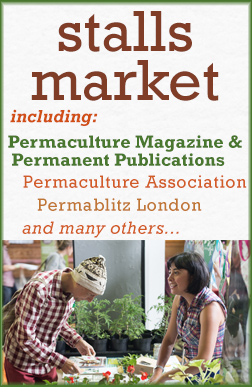
A permablitz typically involves a group of people meeting up for the day to create or develop a community or household edible, wildlife-friendly garden, according to a permaculture design. They spread through a network of reciprocity. Once you have been to a few (usually three) you can have one for your own private or community garden or rooftop/balcony. Come and find out more about Permablitzing: how you can have a permablitz for your garden and what happens when you join a permablitz. www.permablitzlondon.com
Permaculture – A Design Science for All
Aranya
Trying to create a ‘Permaculture’ without design, is at best, an optimistic strategy. Just throwing some ‘commonly seen in permaculture’ elements together and hoping that it works was fine for our ancestors, but we don’t have that much time anymore. By actively learning from nature and applying ecological design principles, we can avoid much of that trial and error in creating solutions for many of the world’s problems.
The Permaculture design process borrows heavily from many disciplines and remains open to new tools and techniques that integrate well. This workshop looks at how this multi-faceted design process can be useful at many levels, for those of us who like to ‘just get on with it’ to those who like to delve a little deeper. Permaculture has something to offer us all.
Aranya is a busy permaculture teacher and author of ‘Permaculture Design: a Step-by-Step Guide’. He has served the British Permaculture Association for many years as both a trustee and a member of several working groups, including Diploma development. He is writing a second book around the subject of systems & patterns in permaculture design.
http://www.learnpermaculture.com/